Sharks in St Croix have always been here. Sightings and interactions are common, especially with scuba divers like me. But shark bites are extremely rare and very often easily explained. However, on January 8, 2026, a terrible tragedy occurred off of St Croix’s West End at one of the island’s most popular beaches and one of my personal favorites. It was the subject of many nightmares. A woman was killed in a reported shark attack.
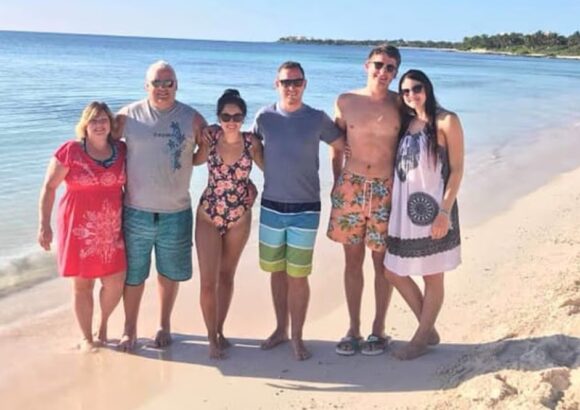
By all accounts, Arlene Lillis was a wonderful mother, new grandmother, wife, friend, and neighbor. She and her husband had lived on the island for a few years but recently decided to become snowbirds. She was an avid snorkeler and loved the beach and the ocean.

Arlene Lillis; Lillis Family on St Croix
Source: Facebook/Google
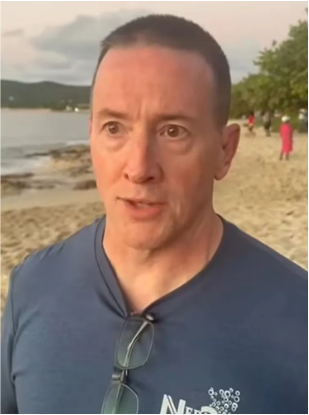
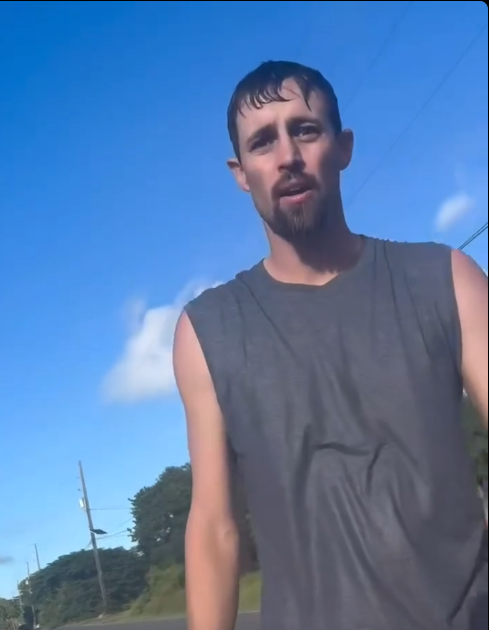
When the incident happened at 4:30 pm, Arlene was snorkeling alone out by the buoys at Dorsch beach. Two brave visitors to St Croix swam out to rescue her. Christopher Caroll, a nurse and former lifeguard, heard her cries from his beachfront hotel room and sprang into action. Ryan Connot, a lineman and father of three visiting from Nebraska with family, grabbed his fins and ran into the water from the beach to assist Caroll. They never saw the shark and didn’t realize what had happened until they reached her. Sadly, the bite was catastrophic, and despite their valiant efforts, she succumbed to her injuries after reaching the beach and being transported to the hospital.
As soon as I heard about this tragedy, I immediately reached out to my friend, shark conservationist and former board member of Shark Allies, Kinga Philipps. She connected me with scientists Dr. Greg Skomal and Dr. Grace Casselberry to offer insight. They have conducted shark research projects here in the US Virgin Islands, Caribbean, and in coastal areas of the US. I’ve already seen so much misinformation and misguided calls to “hunt that shark down”. So, I wanted to share some facts to bring down the temperature while providing informed and expert information that can help to reduce fears and keep people and marine life safe at the same time.
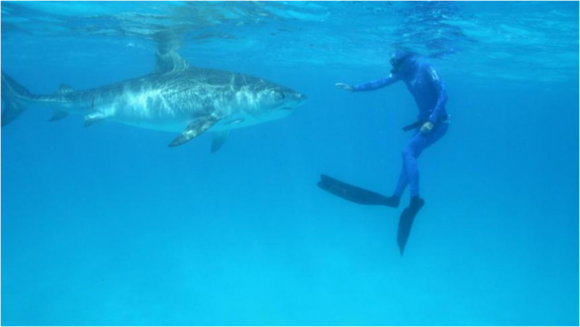
As a lifelong ocean enthusiast and scuba diver for the past two decades, knowing how to keep myself safe in the water has been a bit of an obsession since I was a kid swimming on the beaches of Cape Cod. You see, like many Gen-Xers, I saw “Jaws” at way too young an age and was convinced Bruce was waiting for me in every lake, pond, swimming pool, and bathtub. When I was young, I actually wanted to be a marine biologist, but when I was applying for college, I decided against it because I figured I would have to scuba dive, and I was terrified of getting in the water with sharks (the irony!)
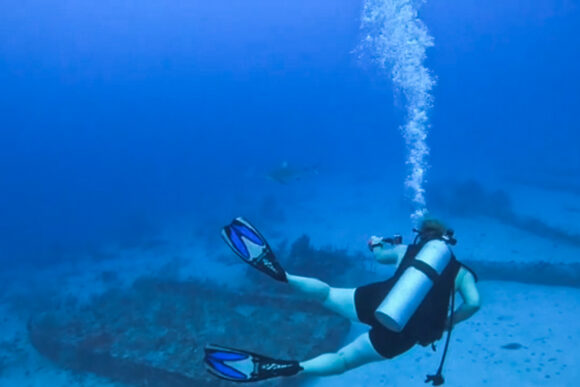
on a dive off St Croix’s West End. Photo credit: Kinga Philipps
Recap: Kinga and Cindy’s 2025 St Croix adventure
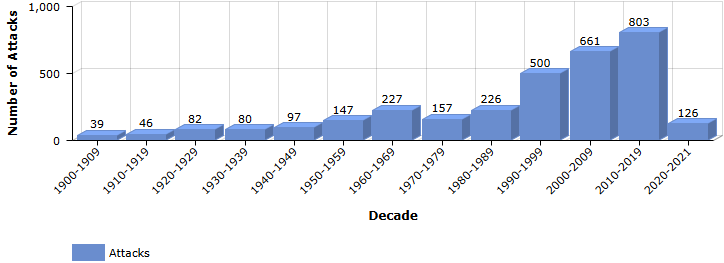
First, let’s be real. The reality is that shark attacks are incredibly rare. In St Croix and the US Virgin Islands, they are extremely rare. In fact, according to the International Shark Attack File (ISAF), previous to January 8th, there have only been 4 confirmed unprovoked shark attacks in the US Virgin Islands since 1749. Statistically speaking, based on the population of St Croix and the average number of annual visitors, there’s a roughly 1 in 10 million per year chance of that happening. While some graphs may show a rising trend in attacks since 1960, it’s really more that there are so many more people worldwide in the water at beaches swimming, snorkeling, surfing, kiting, and scuba diving. More people in the water raises the potential of an interaction. It’s math.
You’re far more likely to die from these causes than from a shark attack
We’ve all heard that you’re more likely to get killed by a falling coconut than a shark, so here are some of those stats:
- Falling coconuts – About 150 deaths per year globally from falling coconuts compared to 5–10 shark-related fatalities worldwide.
- Lightning strikes – Roughly 24,000 deaths annually from lightning.
- Bicycle accidents – Over 300,000 deaths annually worldwide.
- Falling out of bed – Around 450 deaths annually in the U.S. alone.
- Falling icicles – In some regions, up to 15 deaths per year.
- Vending machine accidents – About 13 deaths annually in the U.S. from tipping machines.
- Selfie-related accidents – Over 50 deaths per year globally.
Prior to this tragedy, the last recorded fatal shark attack in the waters of St Croix was in 1972. And, in that case, there are many divers over the years who have questioned this account. A body was never recovered; sharks were never seen except reportedly by one person. But that’s for another story for another time. Since then, there have only been two other non-fatal recorded shark bite incidents. I happen to know both of those victims. (It’s a small island, and I’ve been here a long time.)
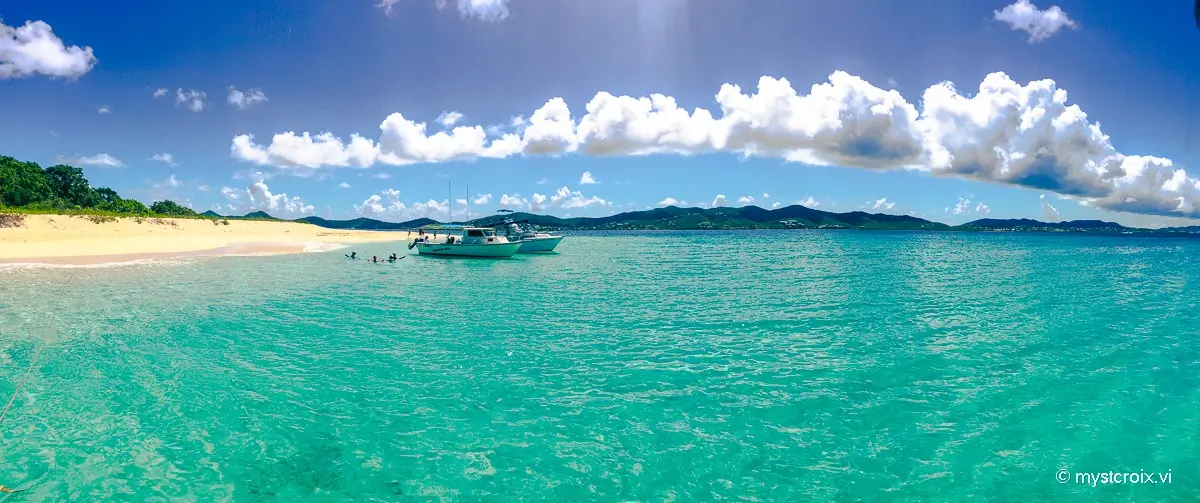
In 2008, my friend was swimming late in the day between boats at Buck Island’s west side Turtle Beach. She was bitten on the foot and subsequently received about 175 stitches. Her foot eventually healed. Was it an exploratory shark bite? Shark bite analysts in Florida determined it was more likely from a barracuda. My friend still contends that it was a shark. She was there, so I’m certainly not going to dispute her experience whatsoever. Experts can make mistakes for sure.
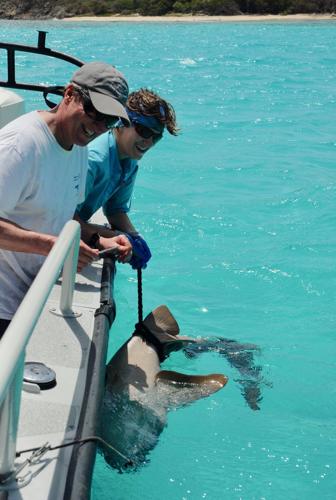
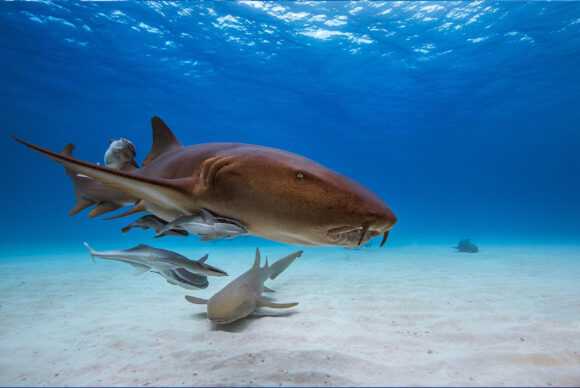
The other incident occurred in an area offshore East of Christiansted. An acquaintance was snorkeling and put her hand down on what she thought was rock, but turned out to be a nurse shark. It grabbed her hand in its mouth, pulling the skin back and causing a lot of damage. She kept her hand and had surgery to repair it. As noted by Dr. Skomal, this was qualified as a “provoked” bite where the nurse shark was instinctively defending itself even though the victim didn’t intend any harm and simply made a mistake.
These were both unfortunate and scary incidents that thankfully didn’t result in their deaths or loss of limbs. They were also very isolated and rare occurrences.
Some online chats have also referenced an incident in 2023 at Cane Bay that resulted in the death of a scuba diver. A woman and her husband were shore diving the Cane Bay Wall and saw a shark. That’s normal. Divers see them out there regularly. She noted that they panicked a bit, so she surfaced. She tried to descend again, but her gear wasn’t letting her. She tried to signal her husband, but he continued to descend, and she was separated from him. When she couldn’t find him, she got help. Initially, some speculated that sharks were involved. But later, rescue divers recovered her husband’s body at about 150 feet, and there was absolutely no evidence of shark activity. None.
The fact is that all of these incidents occurred in the ocean, which is the natural habitat of a lot of marine animals with teeth. They explore their environments with their mouths when looking for their next meal, and they protect themselves with their mouths when they feel threatened. But humans are simply not on their menu. Fact. What’s unfortunate is that one exploratory bite from a large apex predator can cause massive blood loss that can result in death without swift and expert trauma treatment.
What We Know about the Fatal January 2026 Incident Based on Facts
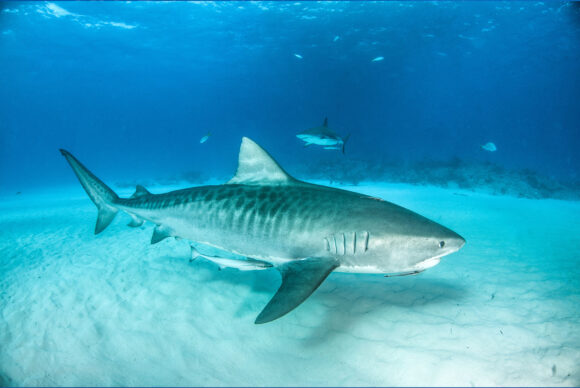
After reviewing a lot of the information, one of the species possibly involved was a tiger shark. That cannot be confirmed yet and will take some careful analysis, but they are known in that area offshore. Offshore.
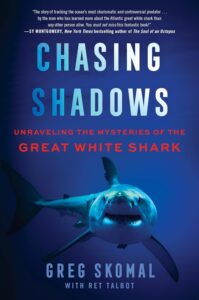
In 2013, Dr. Greg Skomal and Bryan DeAngelis started tagging sharks at Buck Island in cooperation with the National Park Service. You may recognize Dr. Skomal. He’s rather famous now for his work tagging Great Whites each summer off the beaches of Cape Cod and is considered one of the top shark experts in the US. Skomal has been visiting St Croix since 1972 and was Scuba certified here in our waters. He shared that the waters surrounding St. Croix were one of the things that inspired him to become a marine biologist.
“STX is more than a study site for me, it is a second home. I am committed to better understanding sharks in our waters. And like so many others, I am rattled by these kinds of events, but I will go back in the water in St. Croix.”
– Dr. Greg Skomal
In 2015, Dr. Grace Casselberry joined the project while working on her master’s degree at the University of Massachusetts Amherst (where I received my BS in Animal Science) where she was co-advised by Skomal and Dr. Andy Danylchuk. She later received her PhD and is now a postdoctoral research associate in the Recreational Fisheries Conservation Lab at UMASS Amherst. (scroll to the bottom of the article to view her 2019 presentation in Christiansted, “Getting to Know St Croix’s Sharks“)
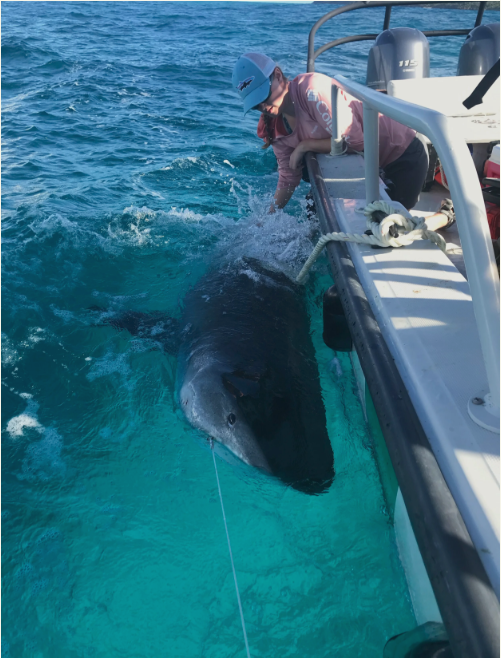
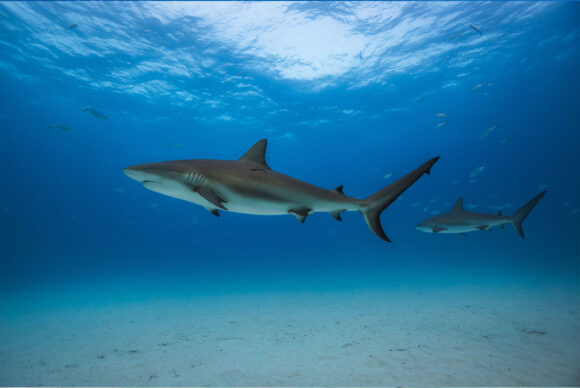
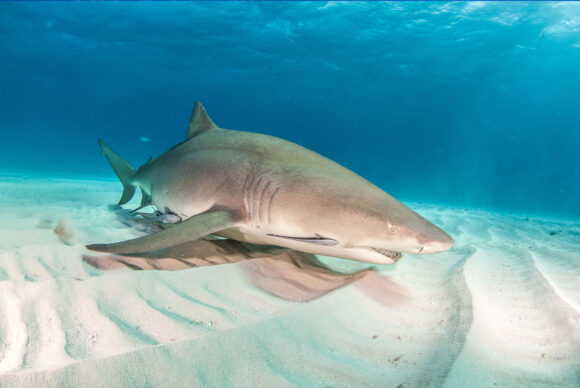
Together, they have acoustically tagged over 50 animals representing four species of sharks off Buck Island. These include: nurse sharks, Caribbean reef sharks, lemon sharks, and tiger sharks. In 2019, the project expanded to satellite tagging of tiger sharks to better understand their broader movements throughout the waters around St Croix.
According to Dr. Casselberry, tagged tiger sharks move all around St Croix, and this includes the 30-40 foot depths along the coastline of the West End to the Frederiksted Pier. And that’s been happening all along. It’s not a new behavior. We’ve all been swimming at those beaches and coexisting without incidents until that day.
Source: Virgin Island Daily News
Source: Grace Casselberry SquareSpace
Sandy Point (one of my other favorite St Croix beaches) is just a couple of miles south; it’s a very active, protected sea turtle nesting beach. Though there has been regular tiger shark activity offshore for decades, if not centuries, it’s closed during the most active part of turtle nesting season. It’s only open on weekends from 10 am to 4 pm from Sept 1 to March 30th. This keeps beachgoers safer by not allowing them in the water when there is likely to be more shark activity.
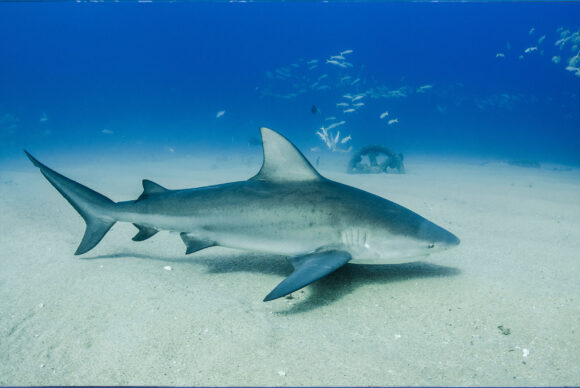
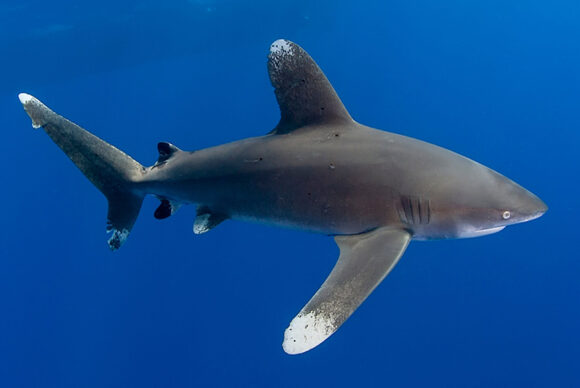
Other possible suspect species include the bull shark. And though there was a video that circulated in November 2025 that confirmed the sighting of an Oceanic White Tip near the shoreline further North of the Frederiksted Pier – that is unlikely. Oceanic White Tips are pelagic, deep ocean water sharks that are listed as critically endangered and rarely seen. Additionally, they are Federally protected under the Endangered Species Act.
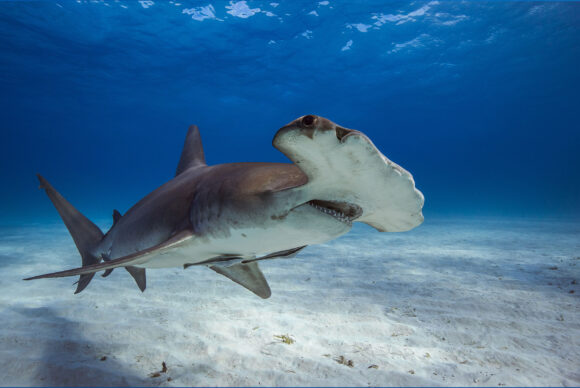
What we do know is that it wasn’t a hammerhead or nurse shark. Though those are seen in our waters, there have been no confirmed fatalities due to either species in recorded history worldwide. They simply don’t have the kind of jaw strength and structure to inflict that level of damage. Both have smaller mouths designed for their diets of fish, crustaceans, octopus, and other creatures that tend to live on the bottom of the sea.
Understanding Shark Behavior
The vast majority of shark incidents can be explained by behavioral analysis. And almost always, the sharks are exhibiting normal behavior for their species and location. (This is just one of the benefits of scientific data and why we need to continue to fund scientific research and conservation efforts!) Often, they are exploratory bites because humans are exhibiting behavior that mimics a fish or other prey.
Large predatory sharks, like great white sharks and tiger sharks, are ambush predators. They are color blind and only see shades of grey, so they rely heavily on contrast at the ocean surface. The bright sky as a backdrop helps them sight potential prey like sea turtles or seals at the surface because it provides high contrast. The countershading of the shark (they are lighter to white on the ventral (lower) half of their body and have darker shading on the dorsal (top) half helps to keep them cryptic and camouflaged in the water. This contrast allows predators an advantage in the hours around dawn and dusk when the sun is at more of an angle to the ocean surface. They are better camouflaged in the darker water. It’s also the time of day that schools of fish are moving more to and from the shoreline.
In the 1990’s I worked at the Norwalk Aquarium (then known as the Maritime Center) in Connecticut. I taught classes to the public and in local schools on a variety of marine-related subjects, including the “Myths and Misconceptions of Sharks.” In that class, we held up simple black silhouette wooden cutouts of a person lying on a surfboard with their hands and feet dangling vs. a seal and a sea turtle. They are hauntingly similar in shape. And remember, sharks don’t wear glasses.
After this recent tragedy, it is ok to be scared to go into the water. That’s a normal human reaction. It’s a primal fear. I was speaking with a friend who is an experienced diver and marine biologist and is very familiar with the area. We are both a bit unnerved right now. This just doesn’t happen around here, and not at that beach.
Dorsch Beach is one of my absolute favorites, and I have swum there countless times. In fact, when my sister was visiting in October for just three days, this was where we had brunch and spent our beach day. I will go back in the water there without hesitation. When I do, there are some basics that I know that help to keep me safer in the water that I’d like to share with you.
Tips for Staying Safer When Swimming in the Ocean
First and foremost, it’s still so important to remember that having a negative encounter with a shark is extremely unlikely. Lightning, coconuts, and taking a selfie are far more dangerous. That said, here are some things to keep in mind when you head out to the beach.
- Always swim with a buddy or group. Whales travel in pods for a reason; there is safety in numbers. Sharks and other larger marine animals are unlikely to go after a group of anything. They are opportunistic and look for the stragglers who are off alone.
- Avoid swimming early in the morning or later in the day towards dusk. This is when fish are moving more actively along the shoreline – into or out of the shallows. Larger predators follow their prey. More simply said, when you can, avoid swimming alone in deeper water at breakfast and dinner time.
- Don’t swim in the immediate area where active fishing is happening onshore or offshore. When a fish is caught on a hook, it fights the hook, and they bleed a bit. This attracts predators like sharks to investigate. That’s why fishermen who pull in a fish with a huge bite out of it (or none at all) call it “paying the tax man”. It’s inevitable.
- Avoid swimming in murky water. Like I said above, sharks don’t wear glasses and they explore with their mouths. They tend to bite first and ask questions later. So, stay in clear water when you can.
- Avoid swimming around prey animals or large schools of fish. If you see fish schooling and jumping or shorebirds diving for food, there is fish activity happening. Try to avoid that. In the Virgin Islands, we don’t have seals or manatees* or other larger marine mammals that we can be mistaken for. That’s more an issue for places like California and Cape Cod. But we do have sea turtles. They typically stay away from the shore, out in deeper water unless they are nesting. Green sea turtles feed on sea grass beds which can bring them a bit closer to shore at certain beaches.
- Don’t splash a lot in the water. Splashing on the surface attracts predators because they will investigate if there is an injured fish or marine animal.
- Don’t wear sparkly jewelry or swimsuits in the water. Jewelry, sequins, etc. can flash in the sunlight, mimicking fish scales.
If you do notice a shark in the area, maintain eye contact and slowly move away. If one does try to bite you, push them on the snout and try to direct them away. If they get a hold, try to hit them repeatedly in the eyes and gills, these are soft and vulnerable areas. I know that sounds all impossible and scary (it sure does to me) but, if you are in that situation and can do it, it could save you.
The best thing you can do is to learn more about the known species of sharks in the area you plan to swim. Learn more about their habits and behaviors. I truly love sharks and am an avid ocean conservationist. But that doesn’t mean that I don’t have a healthy fear of them. I make sure that I am informed and educated so that I can minimize my risk when scuba diving in their environment. Kinga often dives with tiger sharks and is extremely knowledgeable about their behavior and habits – that keeps her safer when interacting with them. But she still knows the risks involved.
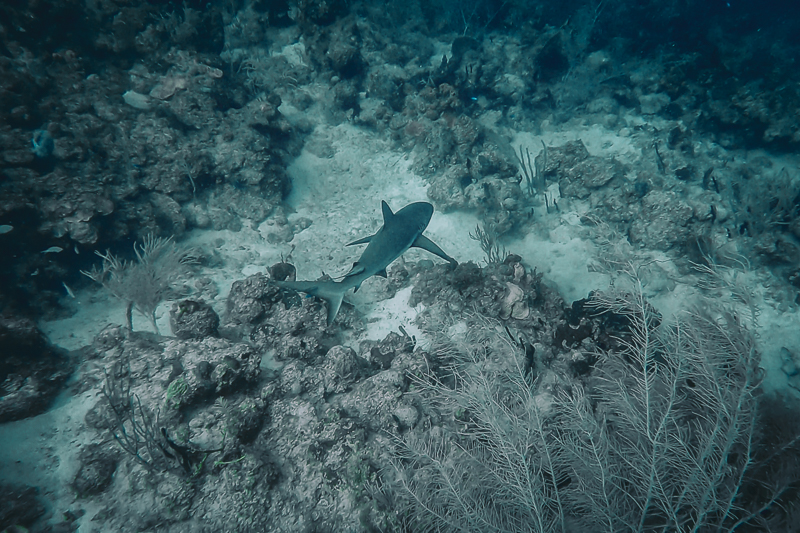
Photo Credit: @MyStCroix
We live in a world where we’ve learned so much about these apex predators. They aren’t the monsters that “Jaws” led us to believe by any scope of the imagination. And yet, we still know so little and have so much to learn. There are over 500 known species of sharks worldwide. Of those, only about a dozen pose a threat to humans in any capacity. These incidents in our waters illustrate how incredibly important further scientific research and ocean conservation efforts are and how critical funding them is for our own safety. When the ocean is in balance, behaviors are easier to predict. When we can predict behaviors, we can plan our activities accordingly and stay safer.
My wish is for us all to be safer in the water, protect our ocean and the creatures in it, and most importantly offer kindness and compassion to the family who are grieving the loss of Arlene. She was a real person who loved our island and St Croix mourns her with them.
*West Indian manatees do exist in the Caribbean and are listed as threatened. They can be found in Puerto Rico and Vieques but are rarely seen in the US Virgin Islands. There have been sightings of seals from time to time that have accidentally strayed South.